
What sets it apart
The canvas is the instrument.
An open surface, a bag of cables, and modules that love being rewired — the routing itself becomes something you play.
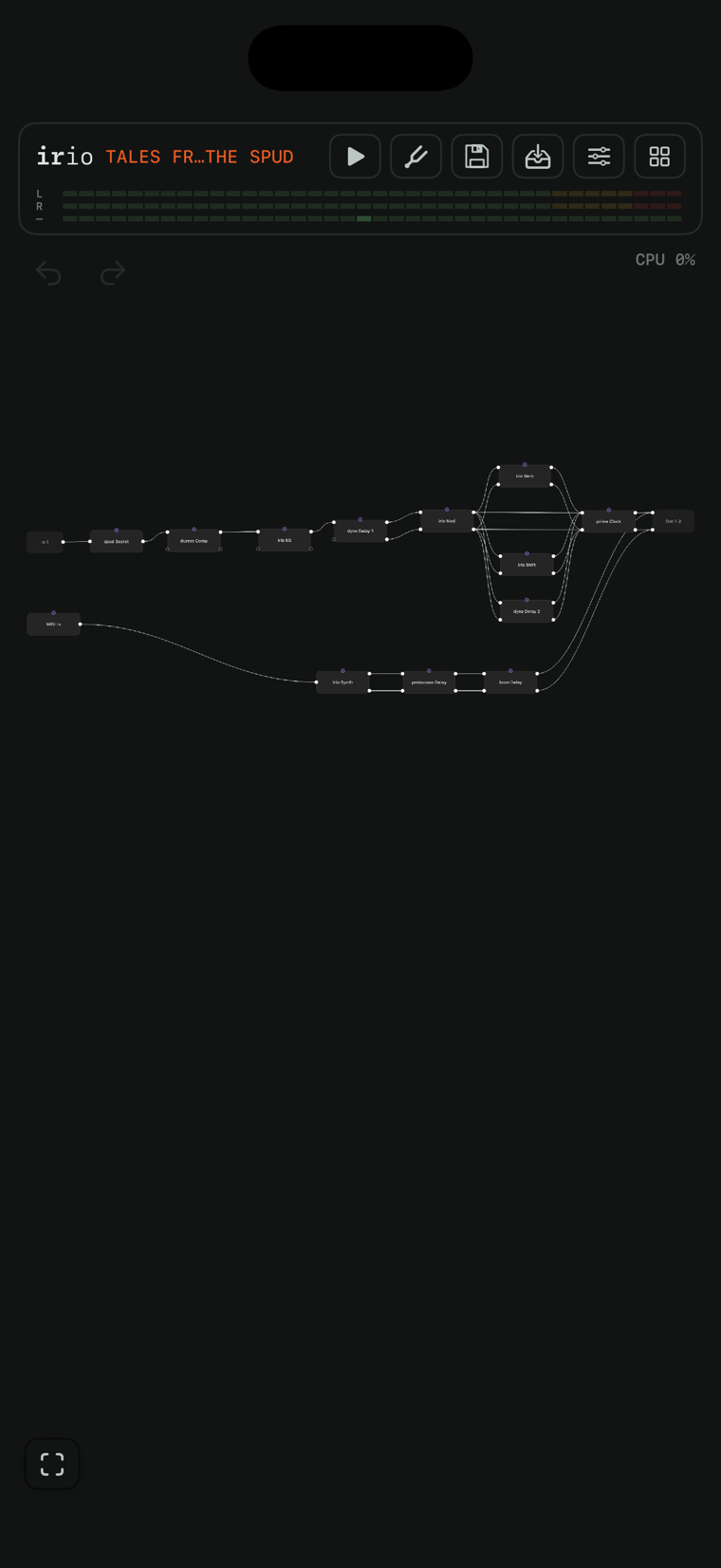
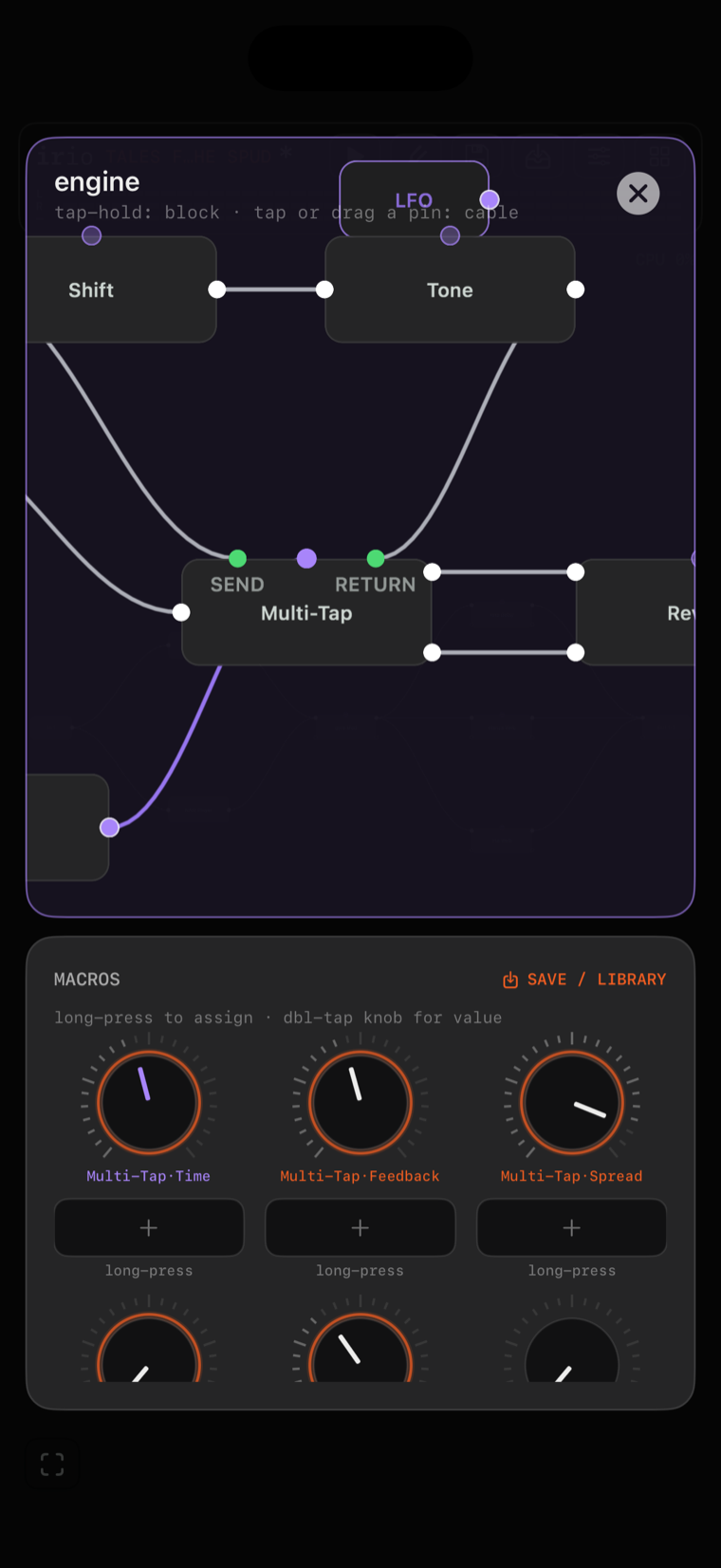
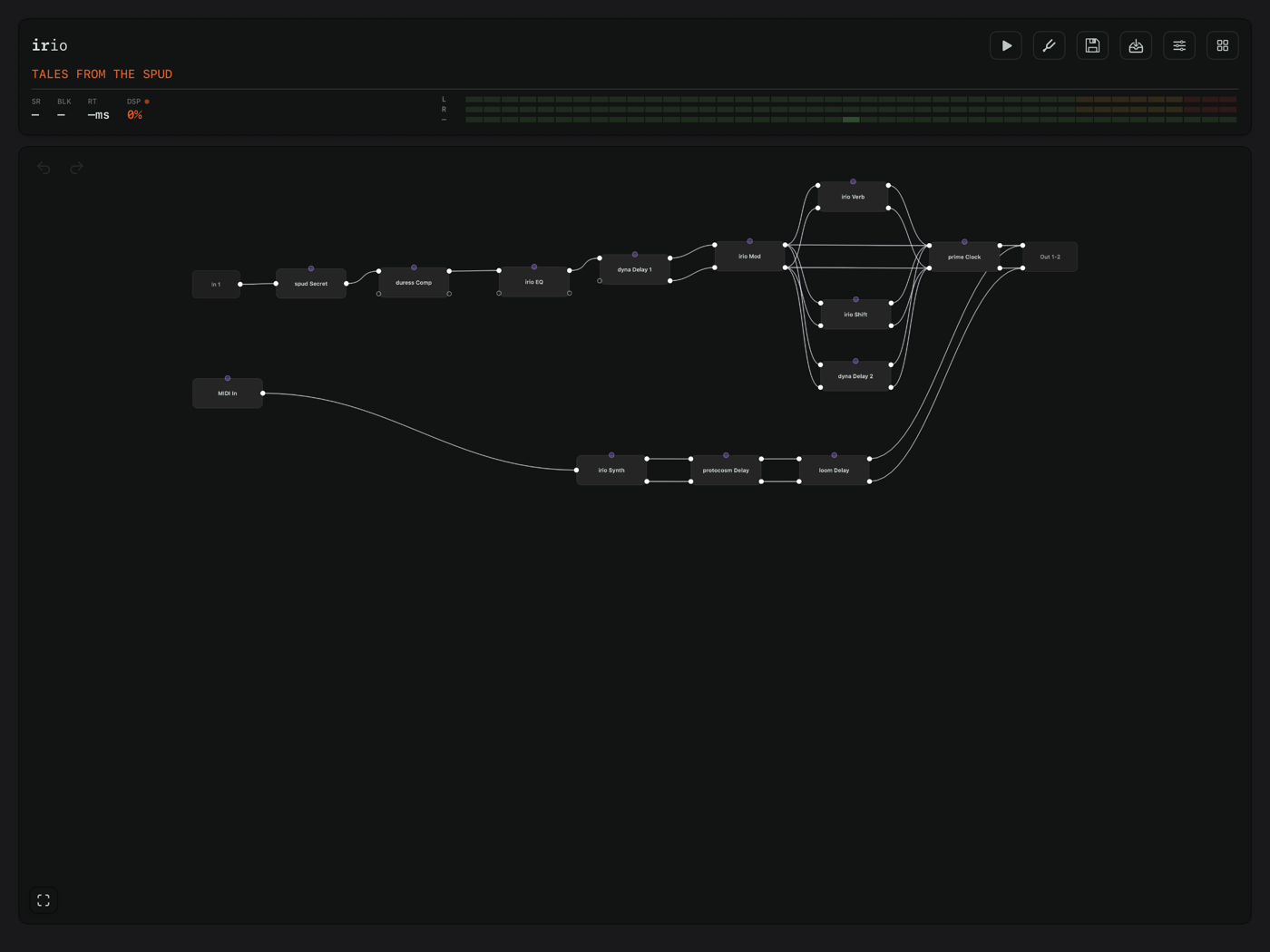
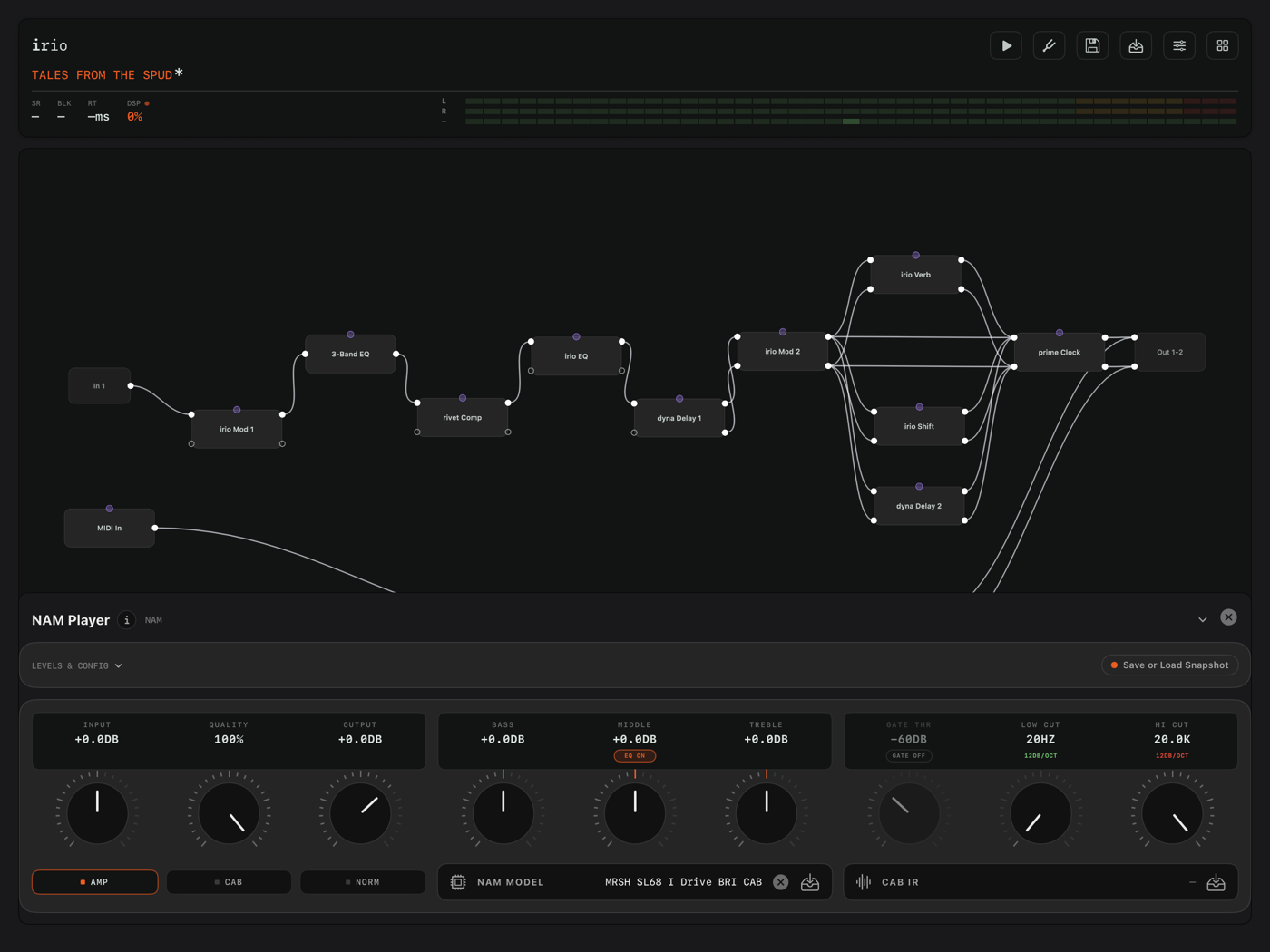
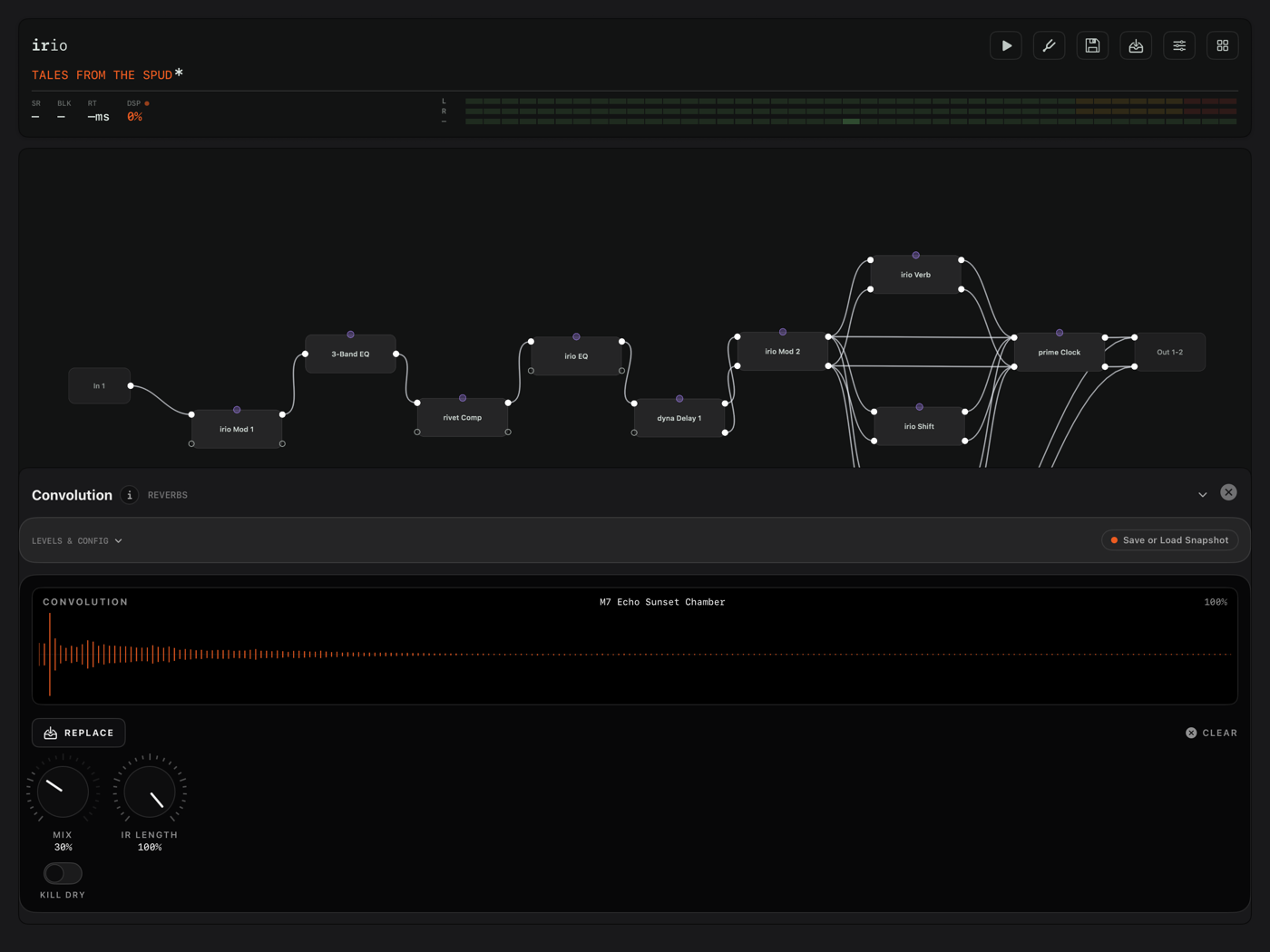
On the canvas there are no slots and no fixed order. Any output feeds any input: split your signal into parallel paths, run a reverb into a delay's feedback, or stack two of the same delay — or three, or four — the only ceiling is the DSP meter in the corner. Every connection gets its own fader and pan, and every pin carries a live meter, so you can literally watch your sound travel through the board.
Then come the purple cables. Wire an LFO, an envelope that follows your playing, or a curve you drew with one finger onto almost any knob of any module — and the board starts moving by itself. Add a MIDI pedal or keyboard and the whole patch becomes one playable instrument. That's the idea at the heart of irio pro: the wiring is how you play it.
Features
Studio-grade modules,
hardware-grade workflow.
Plug in anything
Guitar, bass, synth, voice, a modular rig — if it has an output, it goes in. Or drop in an audio file and run a whole track or a single sample through the chain. Any class-compliant interface works, plug-and-play with no drivers; the ins and outs on the canvas are exactly the channels it gives you.
A whole amp in one module
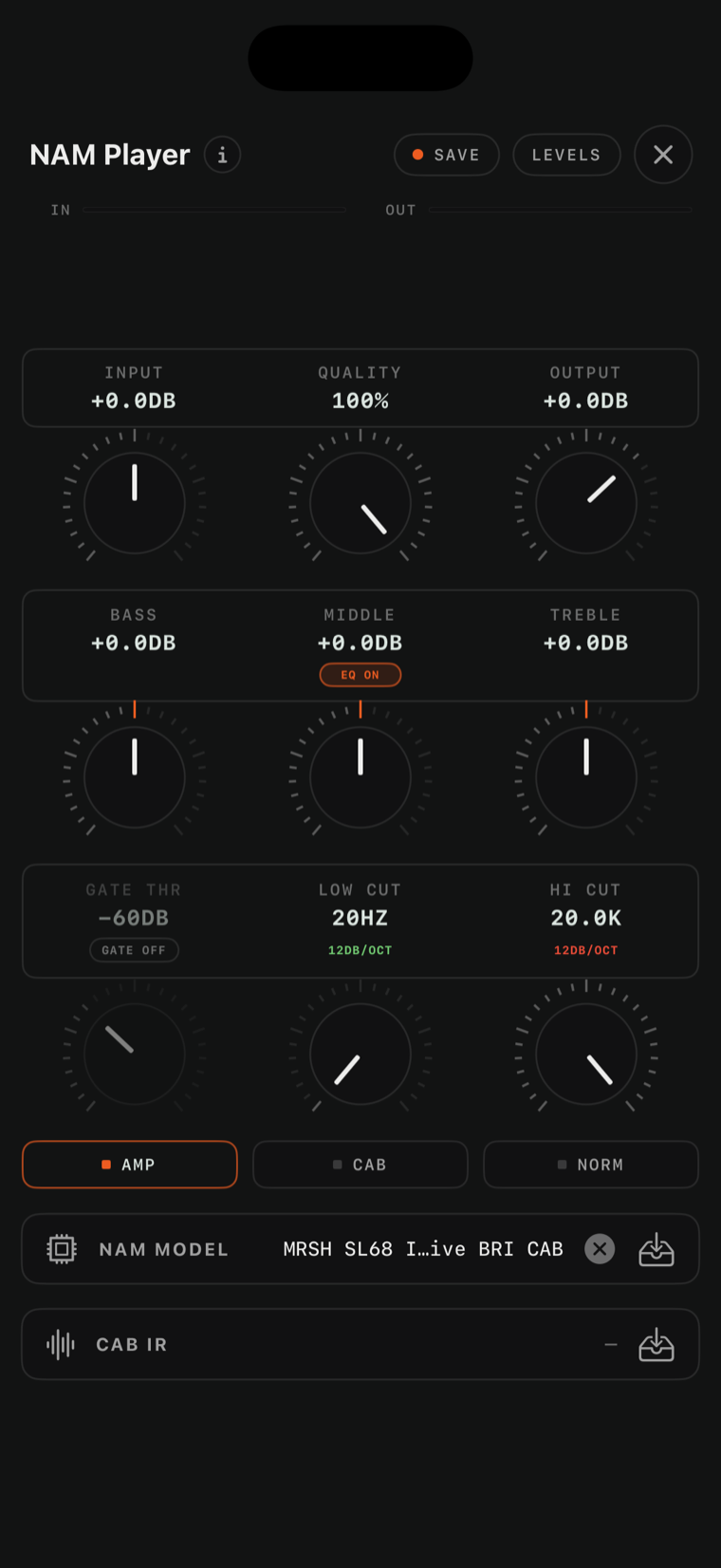
The NAM Player runs neural amp captures — the newest full A2 models at full quality — with cabinet IR, gate, filters and EQ, and free model import from the huge NAM ecosystem. A Quality dial trades a little fidelity for CPU when a patch gets big. Need two amps? Drop a second. A pedal capture in front? A third — stack as many as your DSP allows.
Full canvas inside your DAW
Runs as an AUv3 plugin with the complete modular canvas, host automation via 16 bindable slots that read out by name in your DAW, and delay compensation. Build once, play anywhere.
Built to be played
The perform page turns presets into a stage rig: pads, four performance knobs and banks — each bank opens a whole new page of its own. Bluetooth LE MIDI pedals, controllers and keyboards plug straight in.
Modulation, everywhere
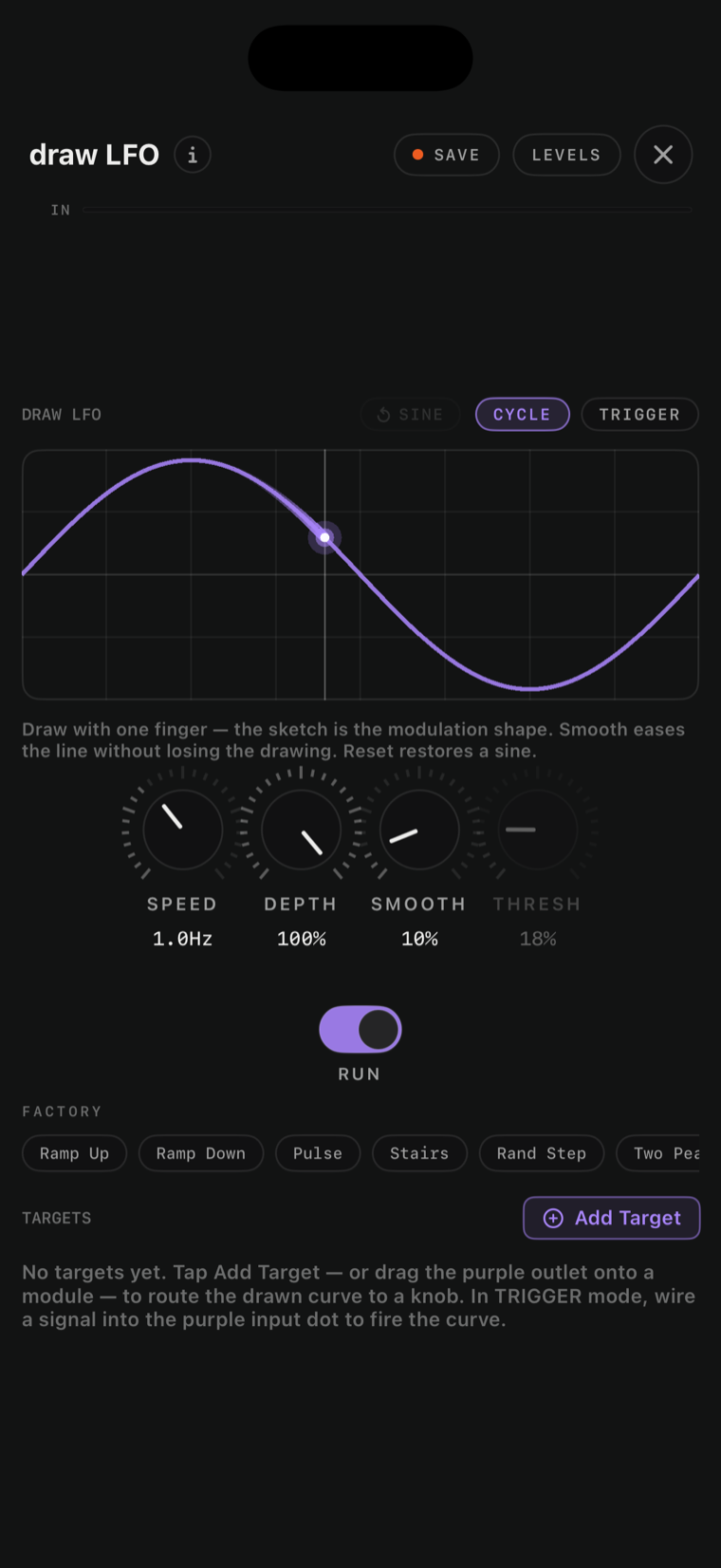
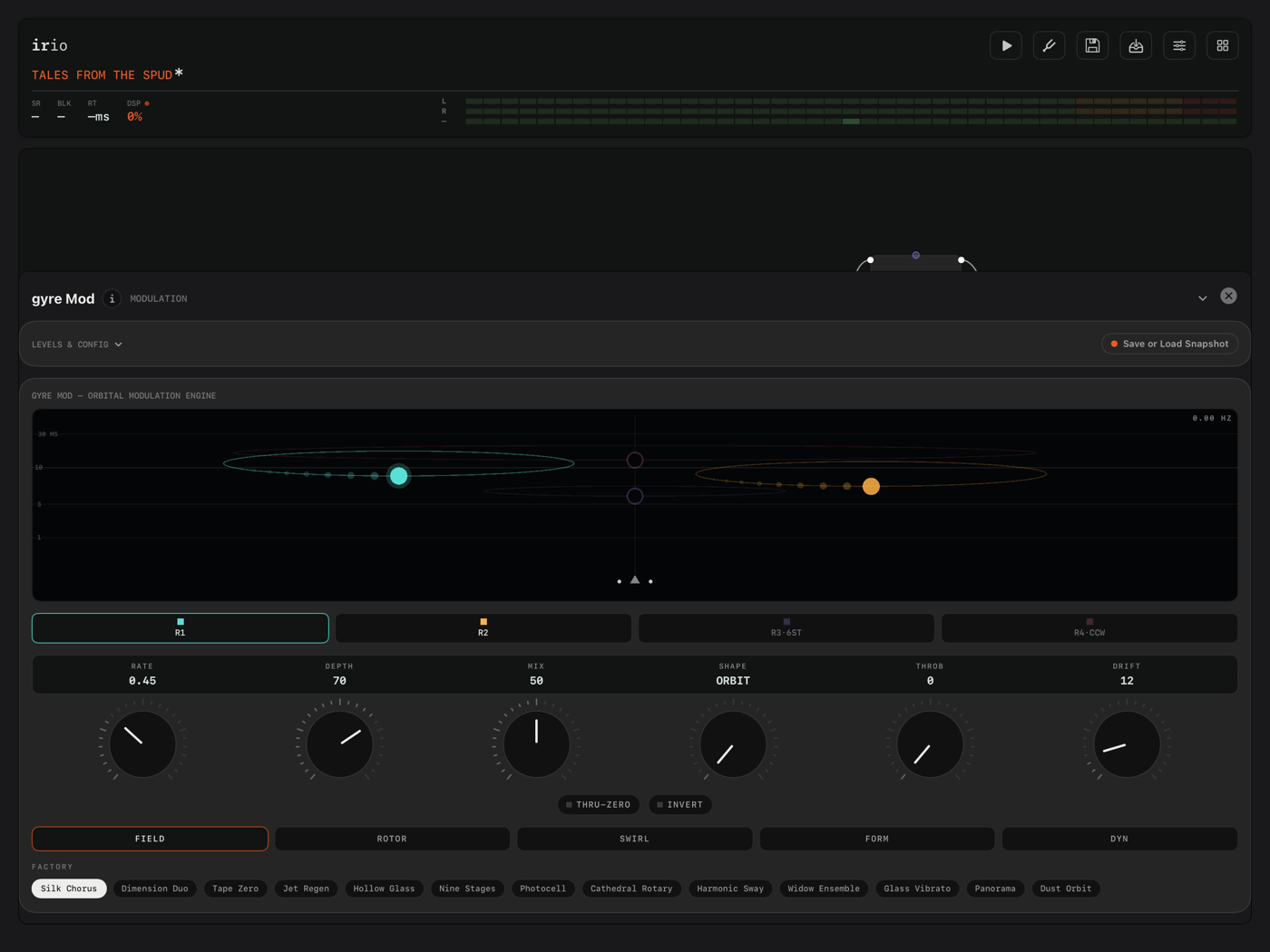
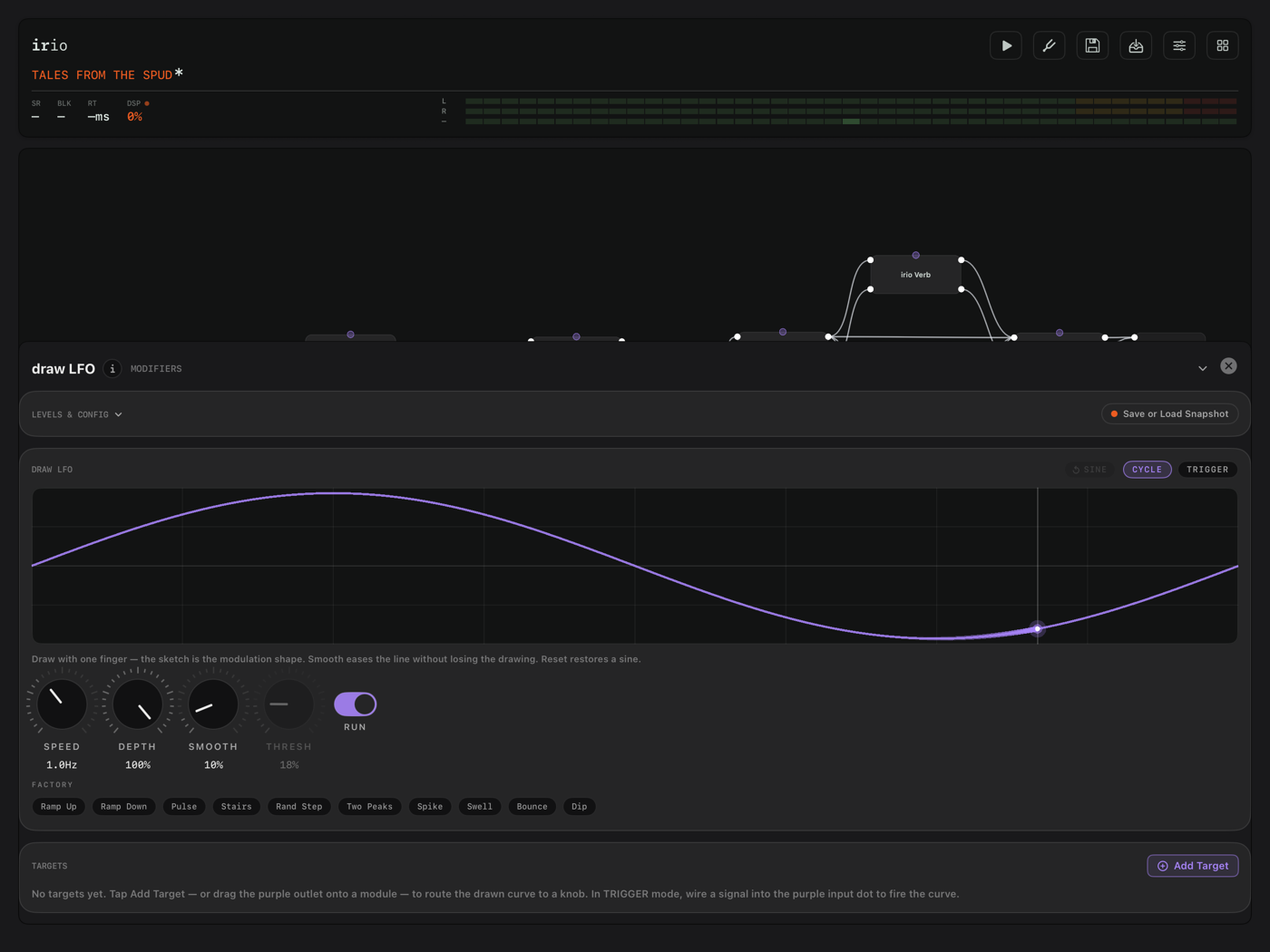
Wire LFOs, envelopes and curves you draw yourself onto almost any knob on the board — a filter that breathes, a delay that drifts, a whole patch that moves on its own. The Envelope even follows your playing dynamics.
A four-track looper
One-button loop tracks — press to record, press to play, press to overdub — with pan, reverse, half-speed, undo and up to a minute of stereo per track. Loops lock to each other or to the tempo, bar-exact with a clicked count-in, and the perform page grows a dedicated looper screen: four pads with live waveforms, ready for your feet or fingers. Sessions save, so an idea caught today becomes sound-design material tomorrow.
A take recorder
The Recorder is a tape deck patched inline: your signal passes straight through, and the red dot captures what flows through it — wire it before an output card and record the whole rig. Trim the silence off a take with a green marker, save it as a WAV into your library (ready to play back through any patch), or share it the moment you played it.
The engine builder
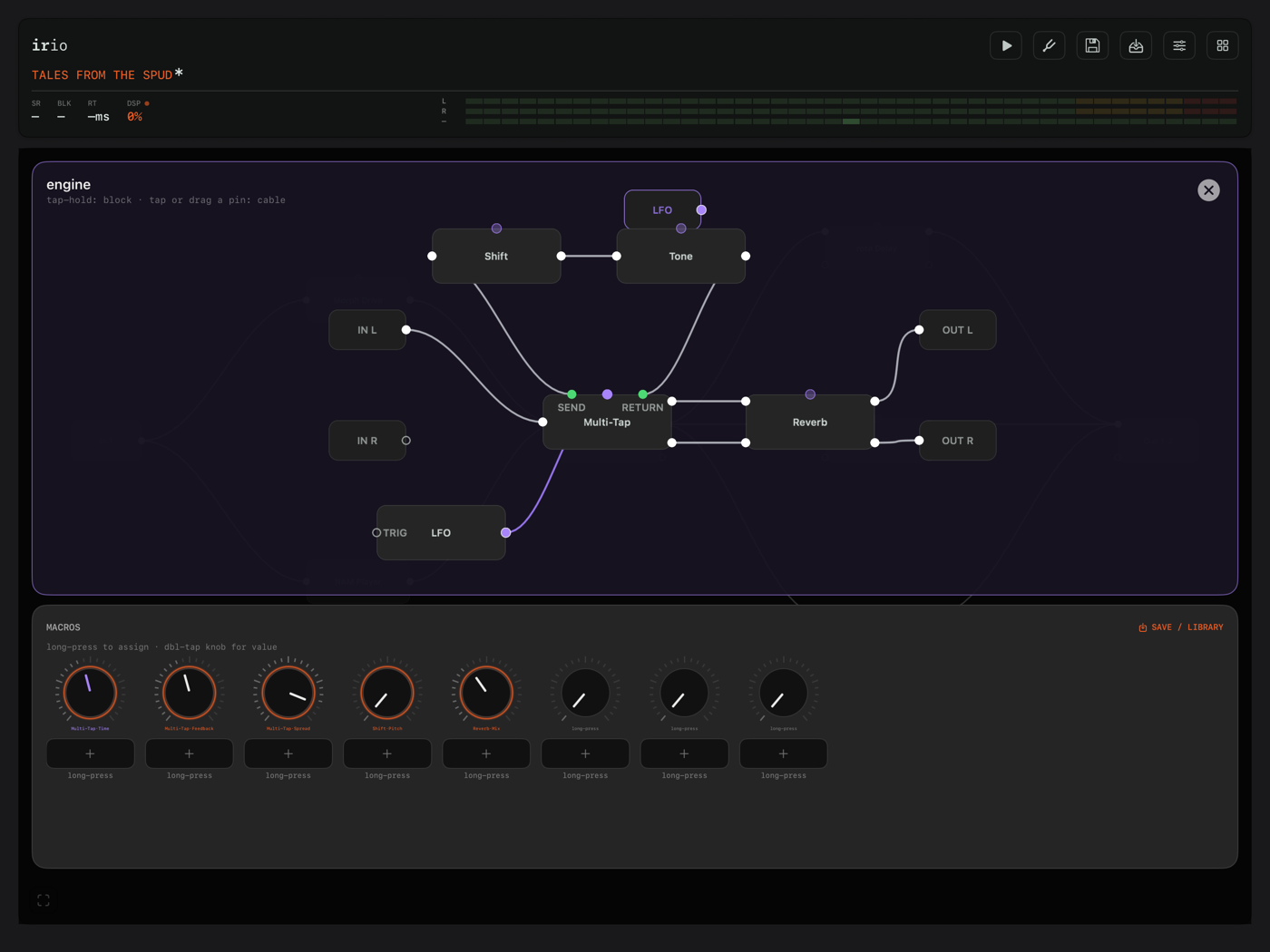
Forty-plus DSP blocks on their own canvas — oscillators, filters, CV logic, clocks — for patching effects that don't exist yet. Saved engines appear in the module picker like any other module.
The canvas
Signal flows left to right.
Everything else is up to you.
Tap and hold empty canvas to add modules, inputs and outputs. Tap an output pin, tap an input pin — wired. Drag to arrange, tap a module to open its console, hold for swap and delete.
Screens
Open the consoles.
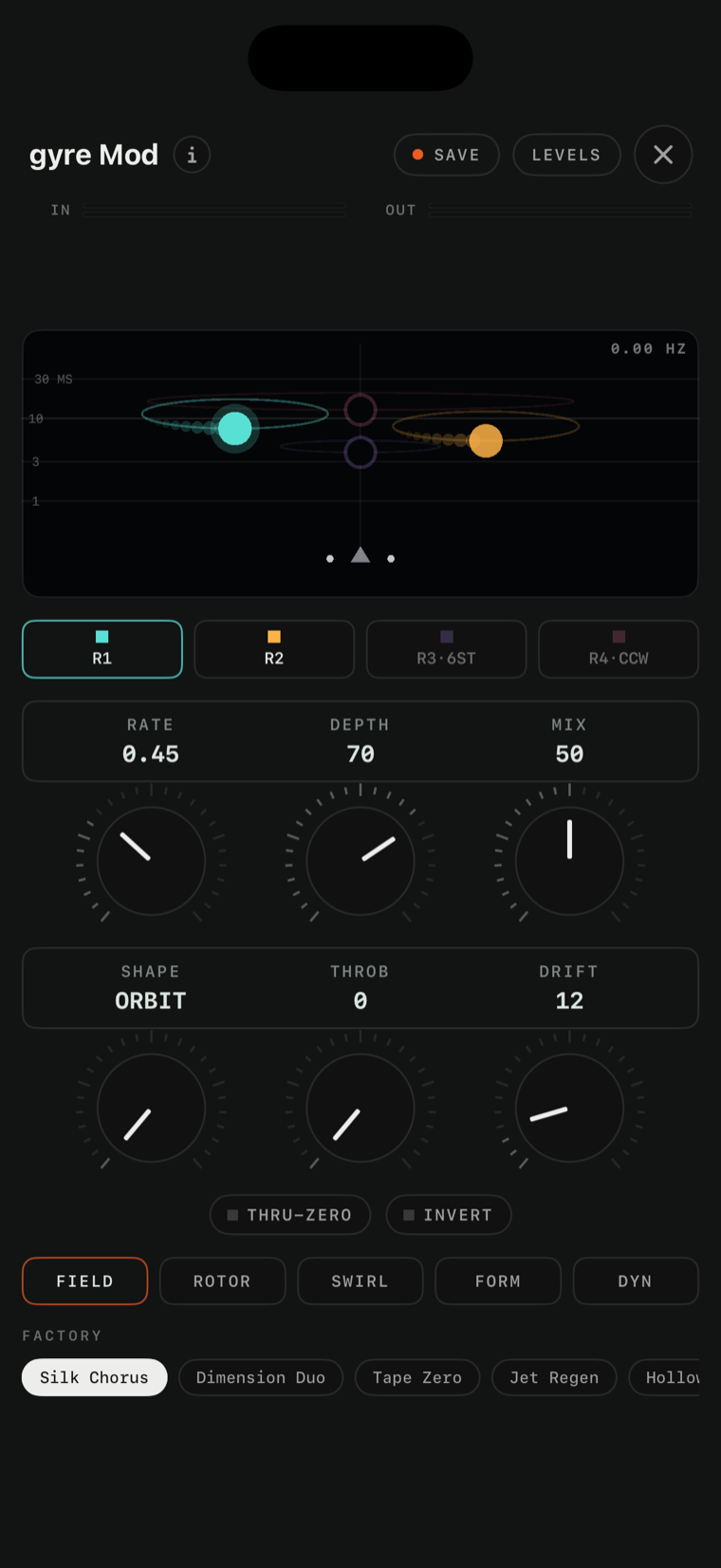
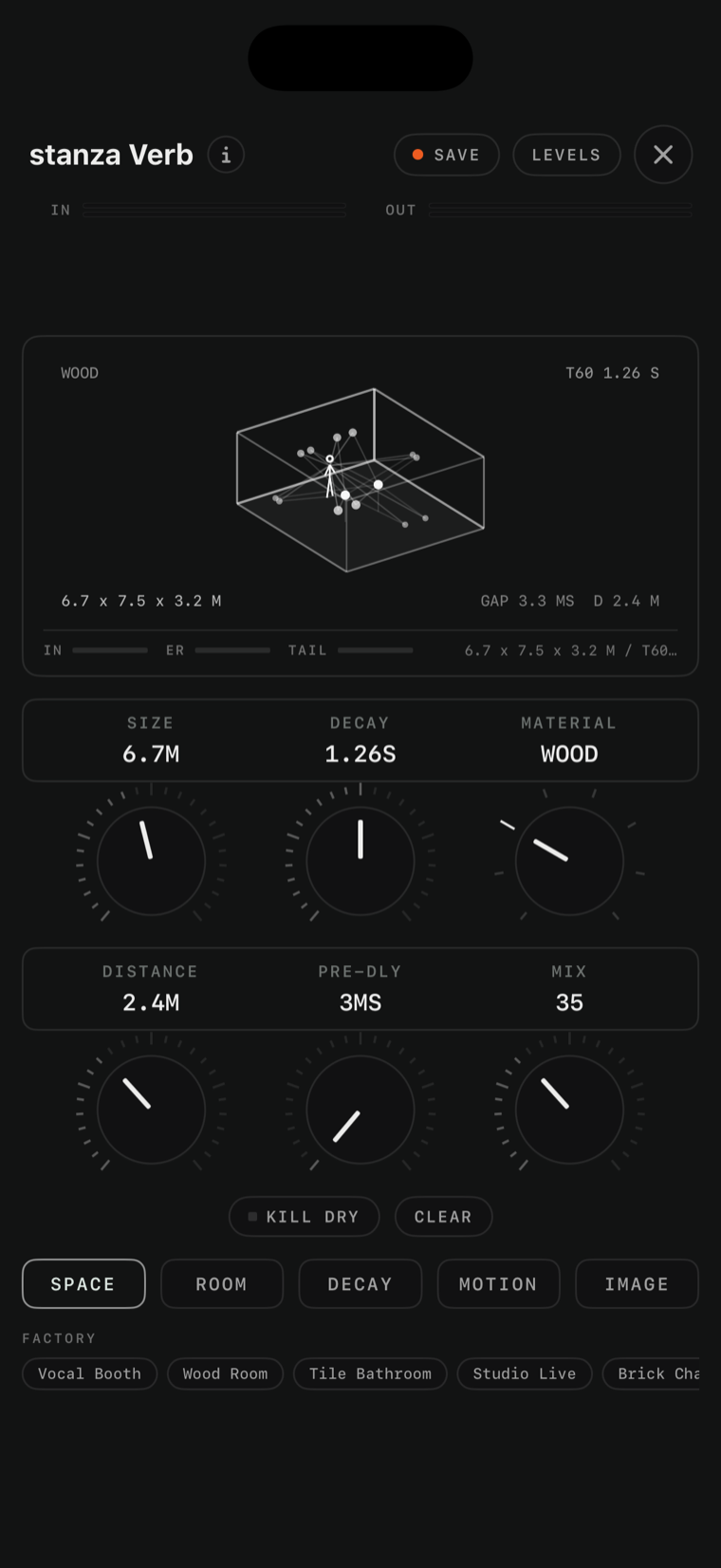
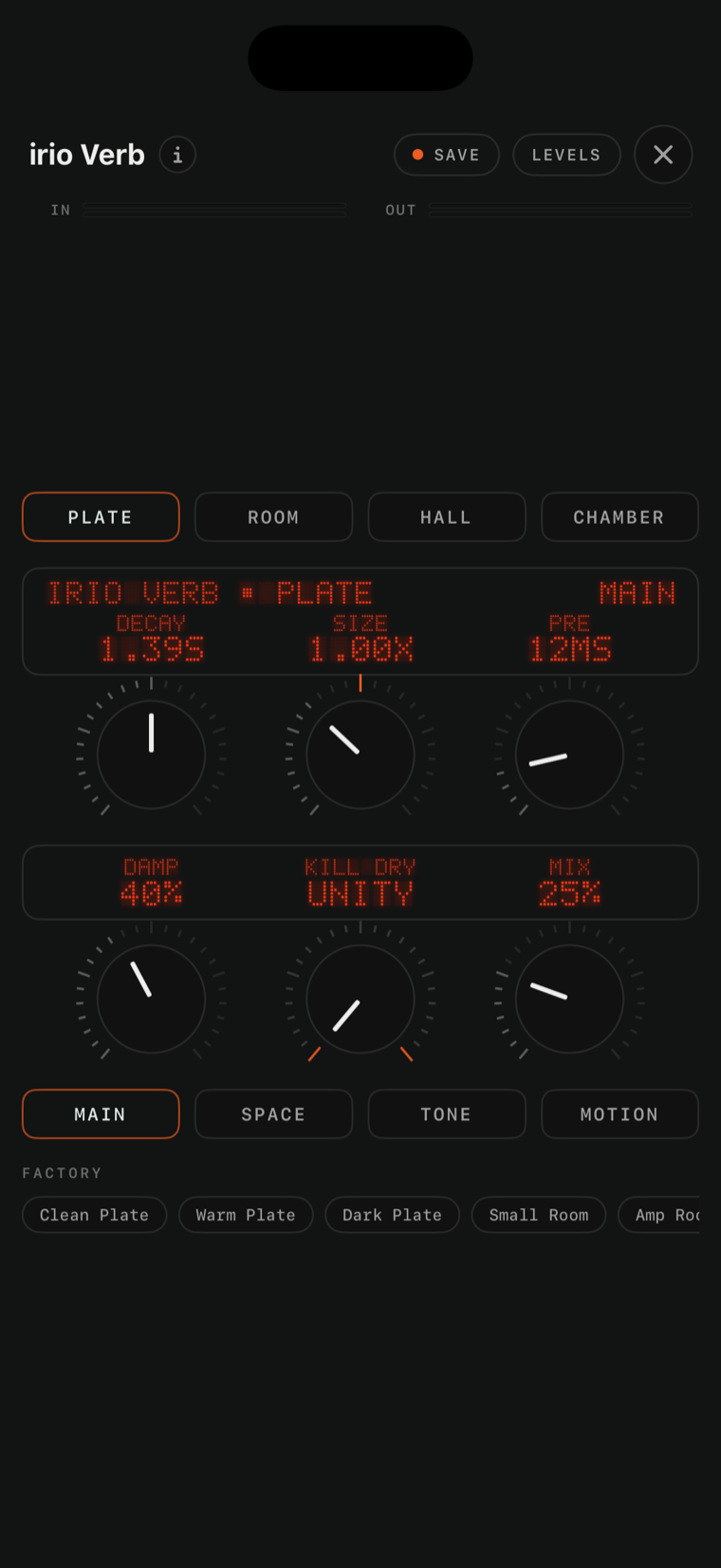
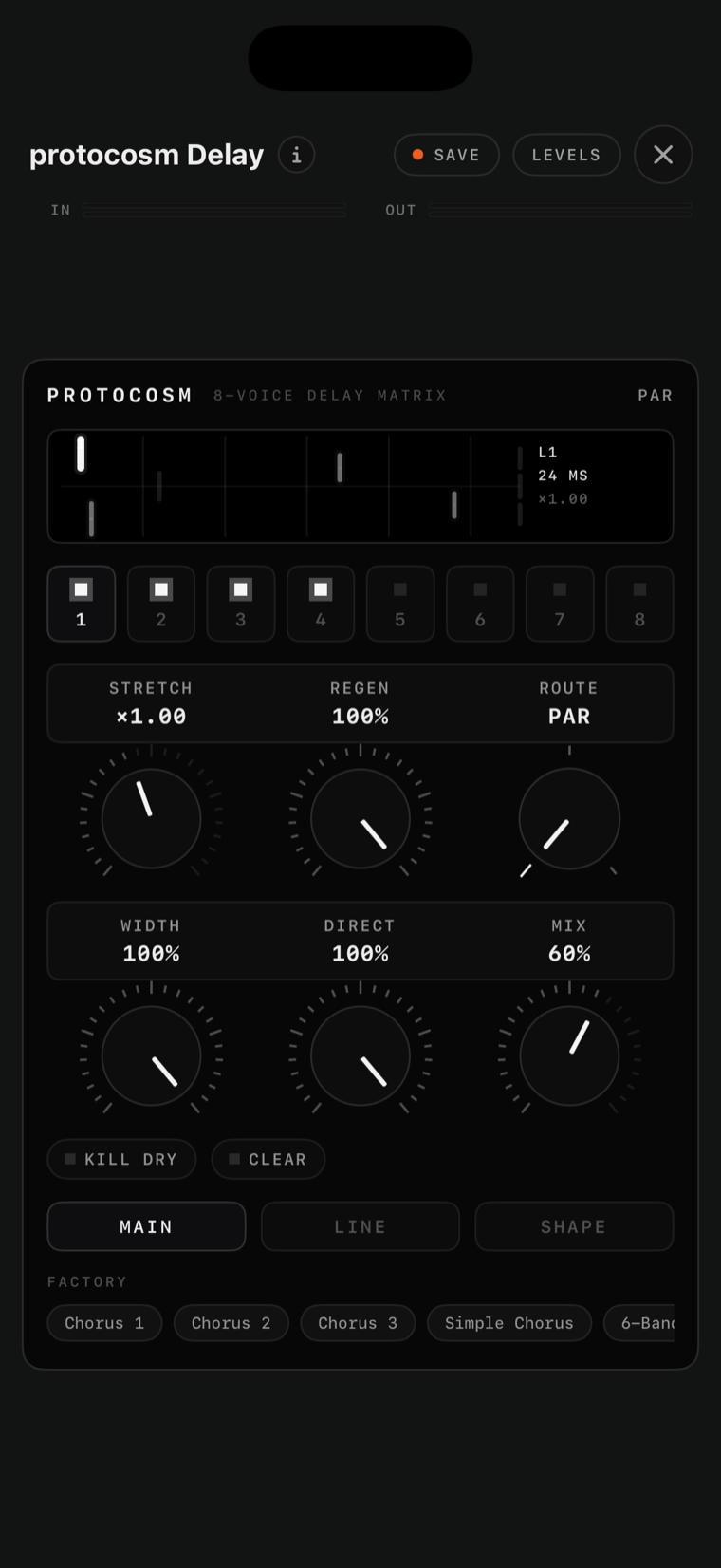
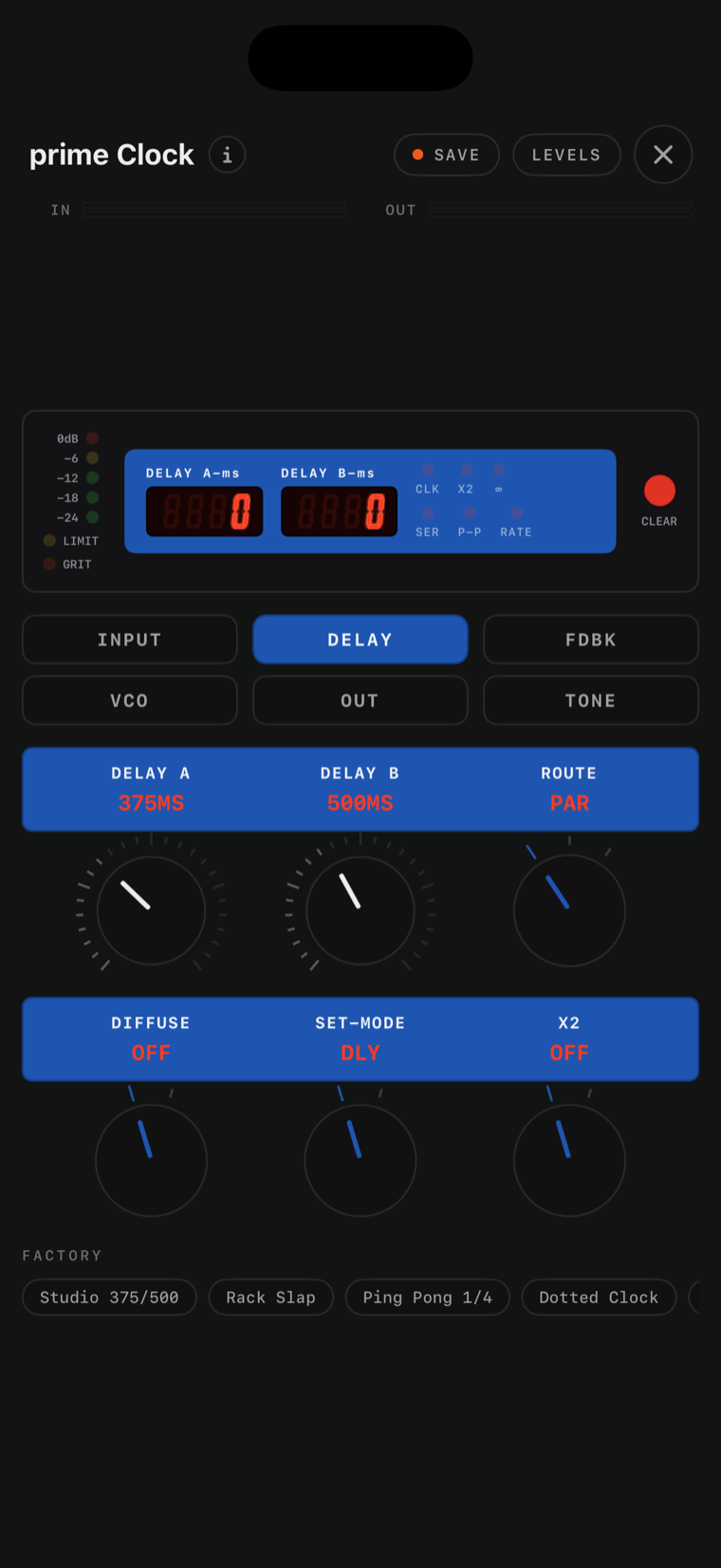
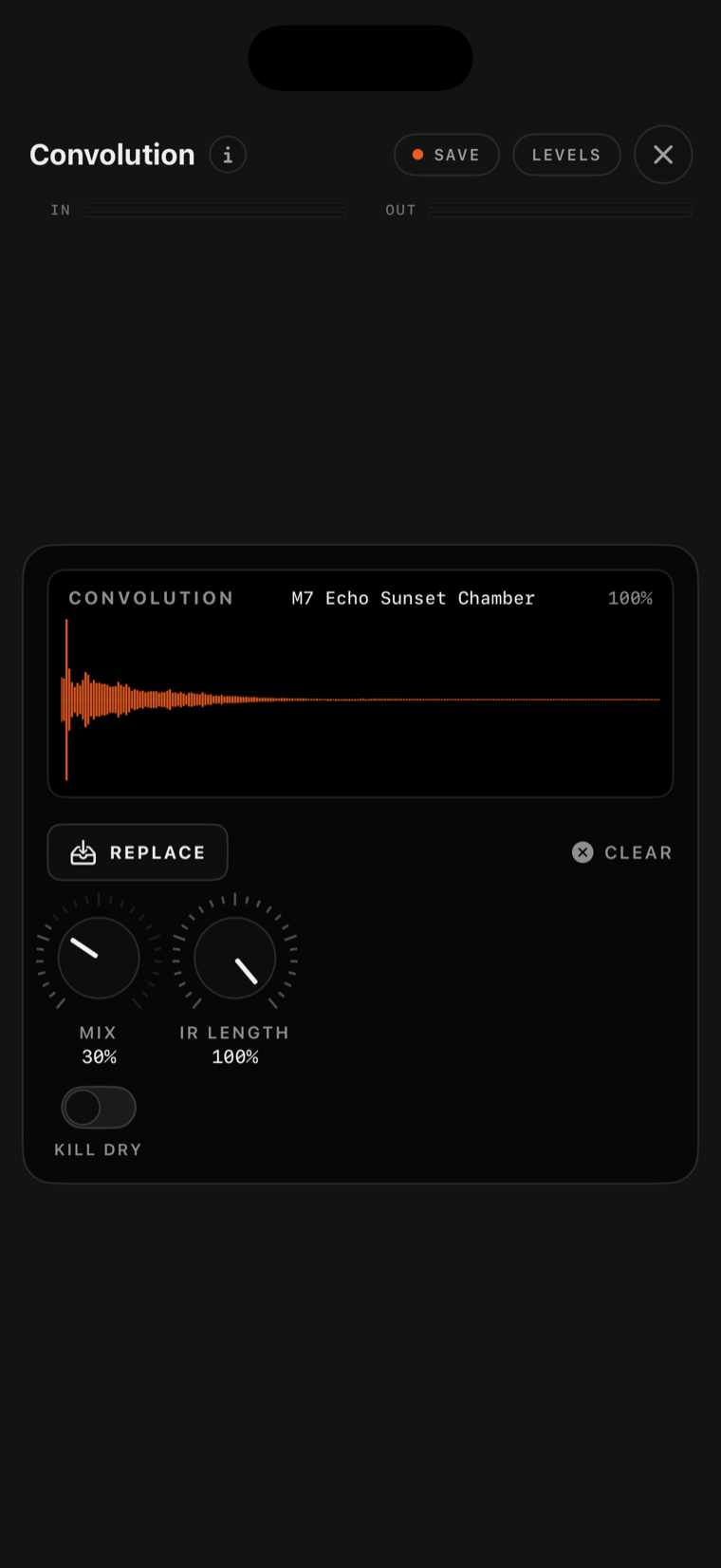
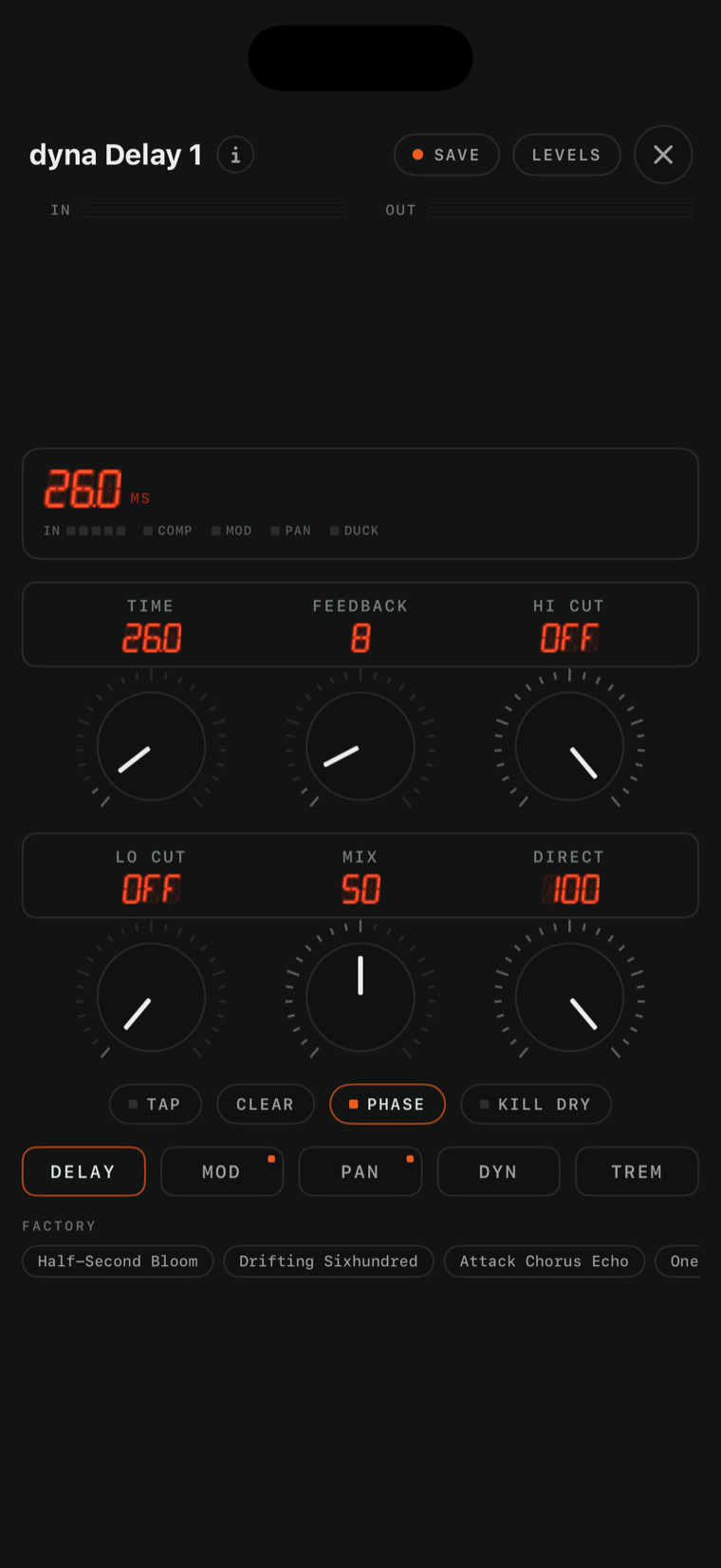
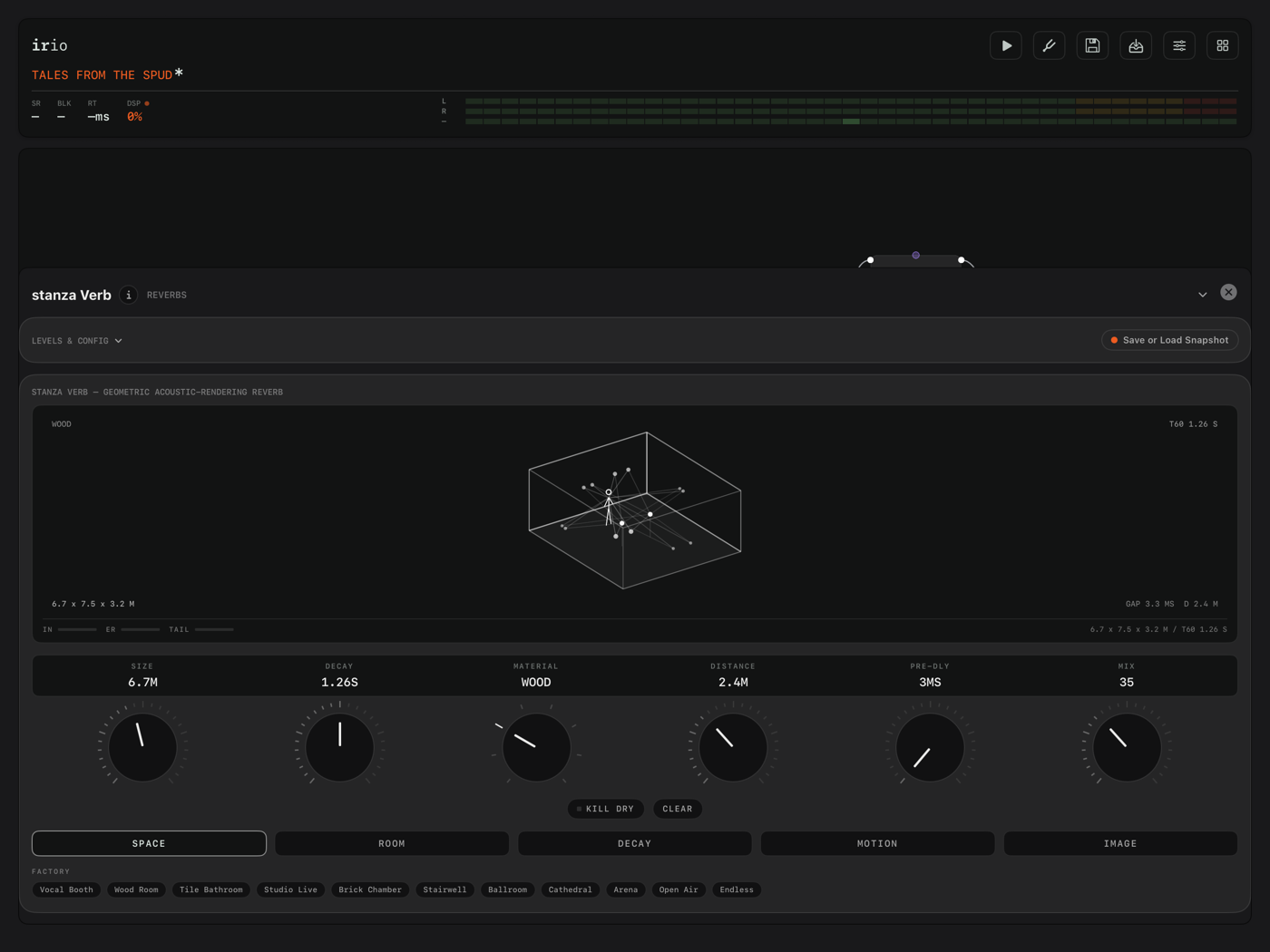
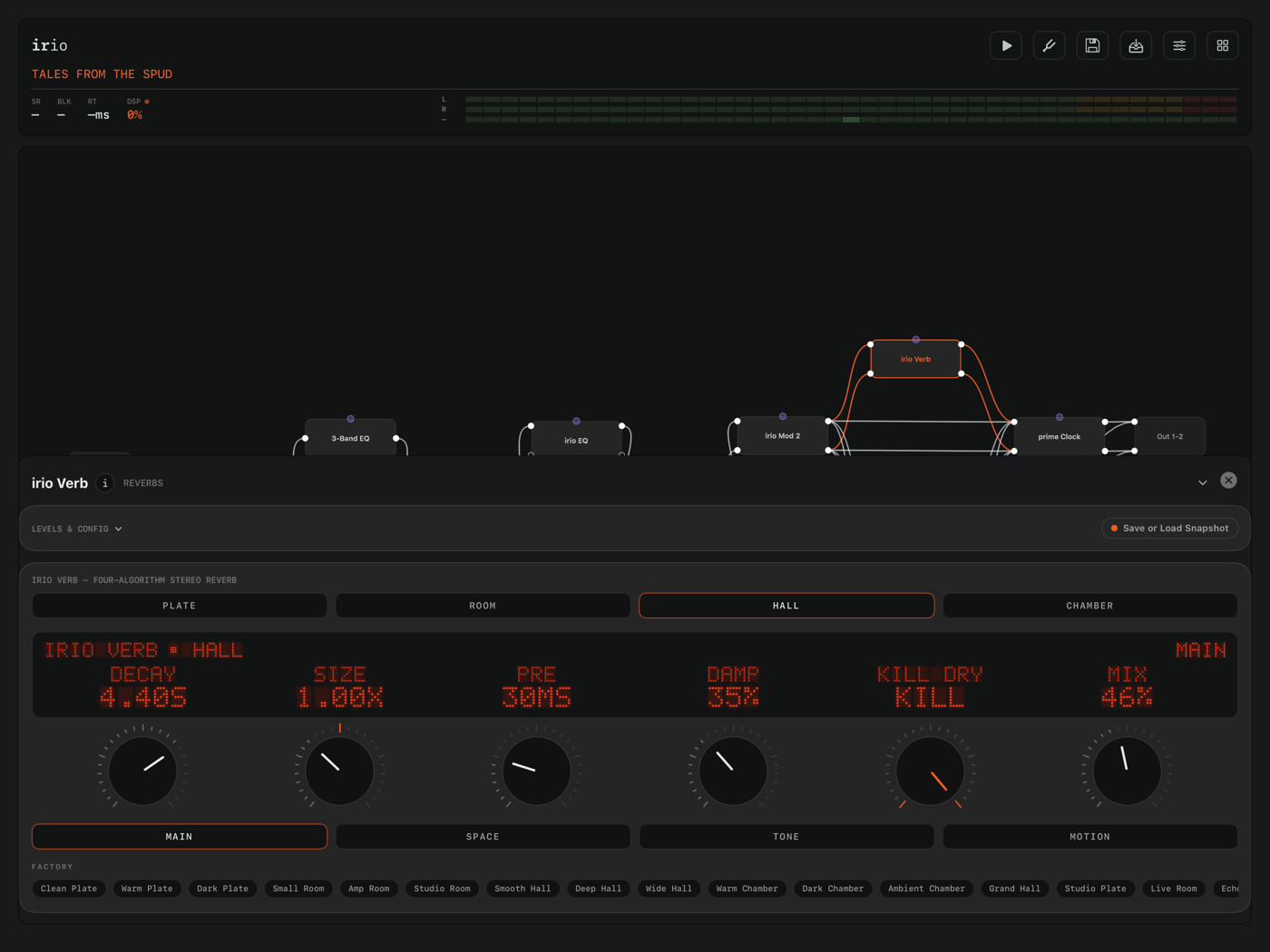
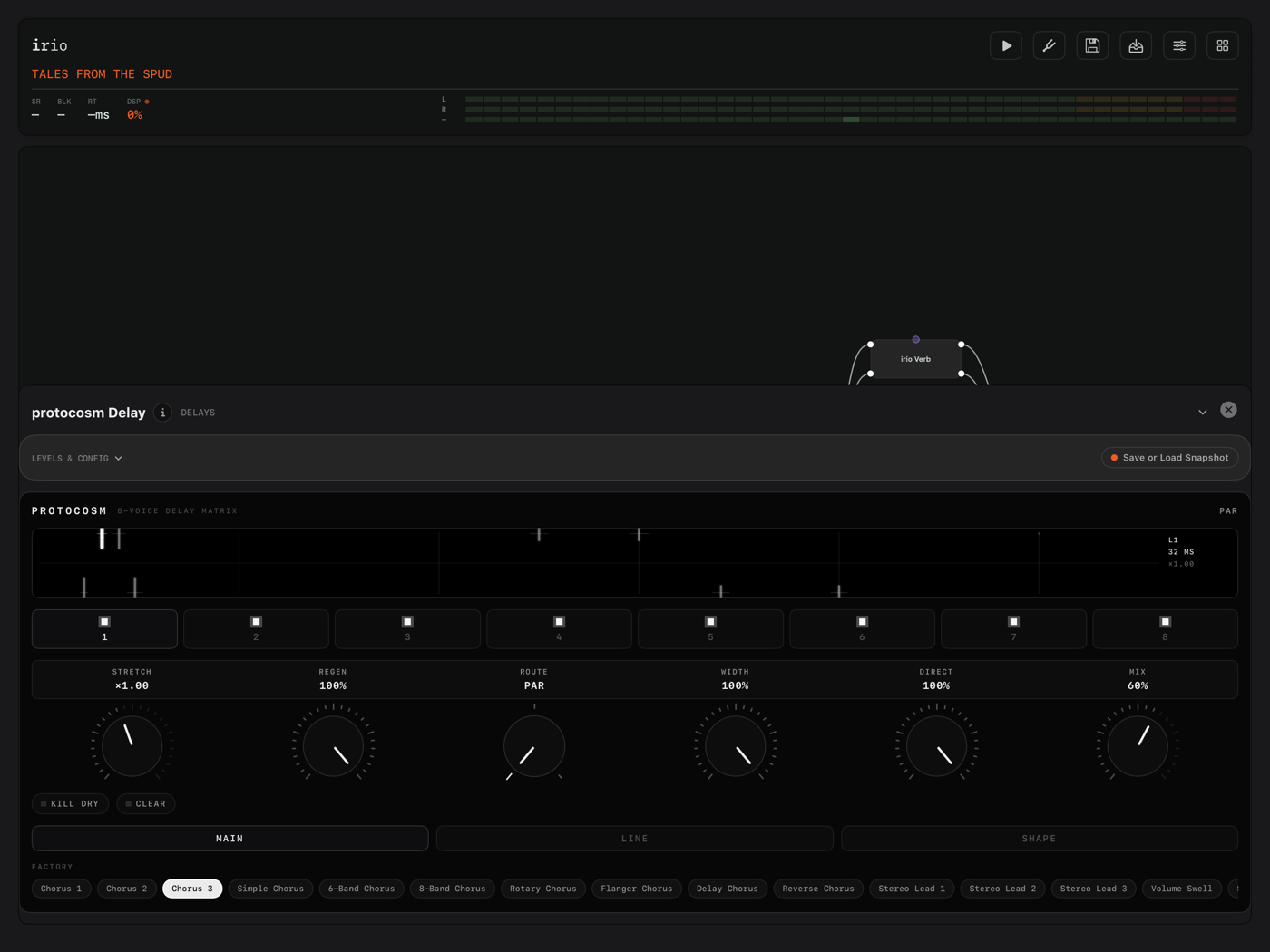
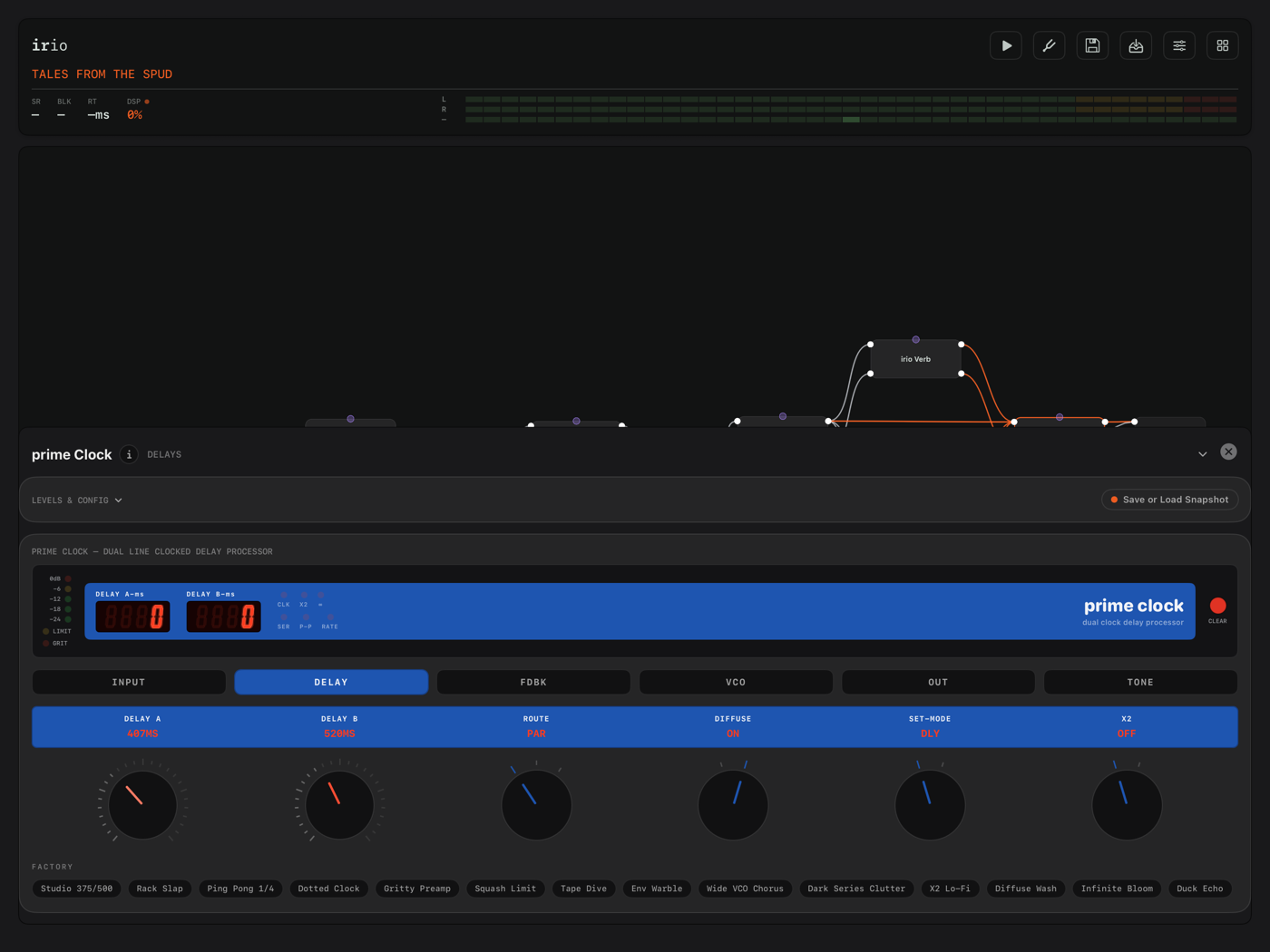
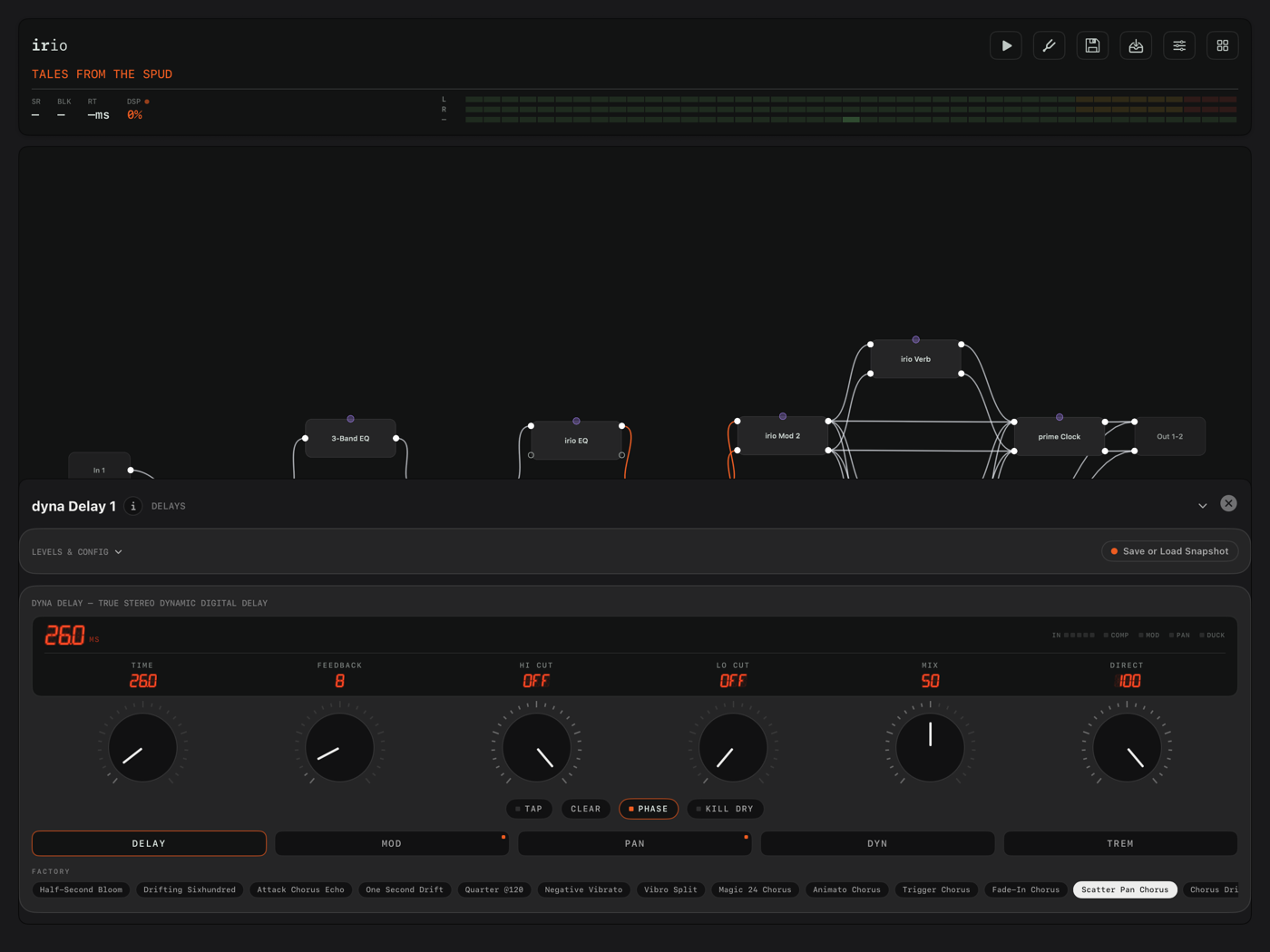
Every module opens into a full hardware-style console — knobs, switches, live displays. Real screenshots, straight from the app — pick your device.
The collection
Every console goes deep.
What I wanted to avoid was bland effects — a delay that's just a delay, a reverb that's just a reverb. So each one chases a character of its own — most of them, whatever made the classic that inspired it. The drive pedals are rebuilt from the real schematics and solved node by node, so the parts clip and load each other the way they do on the bench. The irio Verb was voiced against hundreds of real impulse responses, until its rooms breathe like rooms. The rest I finished the slow way — late nights, headphones, my own ears — until each one behaved like the thing it came from, not just resembled it.
That's where the character hides. The Coma Vibe catches the heavy, seasick throb of the original photocell circuit — its lamps brighten fast and fade slow, exactly the way a bare LFO can't. The dyna Delay keeps the crisp, breathing top end of the old dynamic delays, where the repeats bloom and stay alive instead of dulling into mush. And the prime Clock gives you the fat, clock-modulated echoes of an early-'80s studio rack — grit, wobble and all.
None of it is spec-sheet stuff. It's the difference between an effect and a tone you can feel — and I'm proud of all of them, not just these three. I put a lot of love into this. I hope you like it.
That's the canvas today. Who knows what the future brings.
Pricing
Play it free.
If you love it, unlock the rest.
irio pro is built by one person in Hamburg. The free rig is genuinely free — play it as long as you like. And if the canvas wins you over, a single one-time purchase unlocks everything irio pro is today — the whole collection, no subscription, nothing rented — and keeps this project growing.
- NAM Player with free model import, cab IR, gate & EQ
- morph Drive · gyre Mod · irio Delay · irio Verb · 3-Band EQ · Noise Gate — one instance of each, freely patched on the canvas
- Practice trio: backing-track Player with pitch-preserving slow-down, semitone transpose & A-B looping, a Metronome with a speed trainer, and the Global Tempo card — one clock the whole board (even delay and modulation-rate knobs) can lock to
- Perform page, tuner, presets, whole-system backup, AUv3 — all included
- Built-in preset "Tales from the Spud" plays a taste of the Pro collection
- Every module in today's collection, as many instances of each as your device's DSP can carry
- The four-track Looper — one-button loop tracks with pan, reverse, half-speed, undo, loop/tempo sync and its own perform screen with live waveform pads
- The Recorder — capture takes inline, trim them and share them as WAV, or save them straight into your library
- Full multi-channel routing — as many ins and outs as your audio interface provides
- The engine builder: 40+ DSP blocks on their own canvas
- Modifiers: LFO, Envelope, Draw LFO on almost any knob
- MIDI control of the entire perform page — Player transport and every looper function on perform pads (loops on a footswitch)
A note from the designer. First of all — thank you for being curious about something that has become a very big part of my life. I've been a professional musician for the last twenty years, and I've designed and built analog pedals and rigs under the name nørholm — but I always wanted to create my own fully modular digital rig. This is it.
I'm also a guy from the old hugeracksinc.com forum days — shout-out to all the groomed noodlers ;) — so yes, I'm a sucker for old rack equipment, and you'll see it in every console. I'll keep working on irio pro. If you feel like supporting the work, it would mean the world to me — and if you have ideas or feedback, write me any time. Best regards — Mads
Say hello
Ideas? Feedback?
I'd love to hear from you.
irio pro grows with the people who play it. If something made you grin, if a module could go deeper, if you hit a rough edge — write me. I read everything.
Tap the patch to write me — the address is wired, not written, so spam bots can't read it.